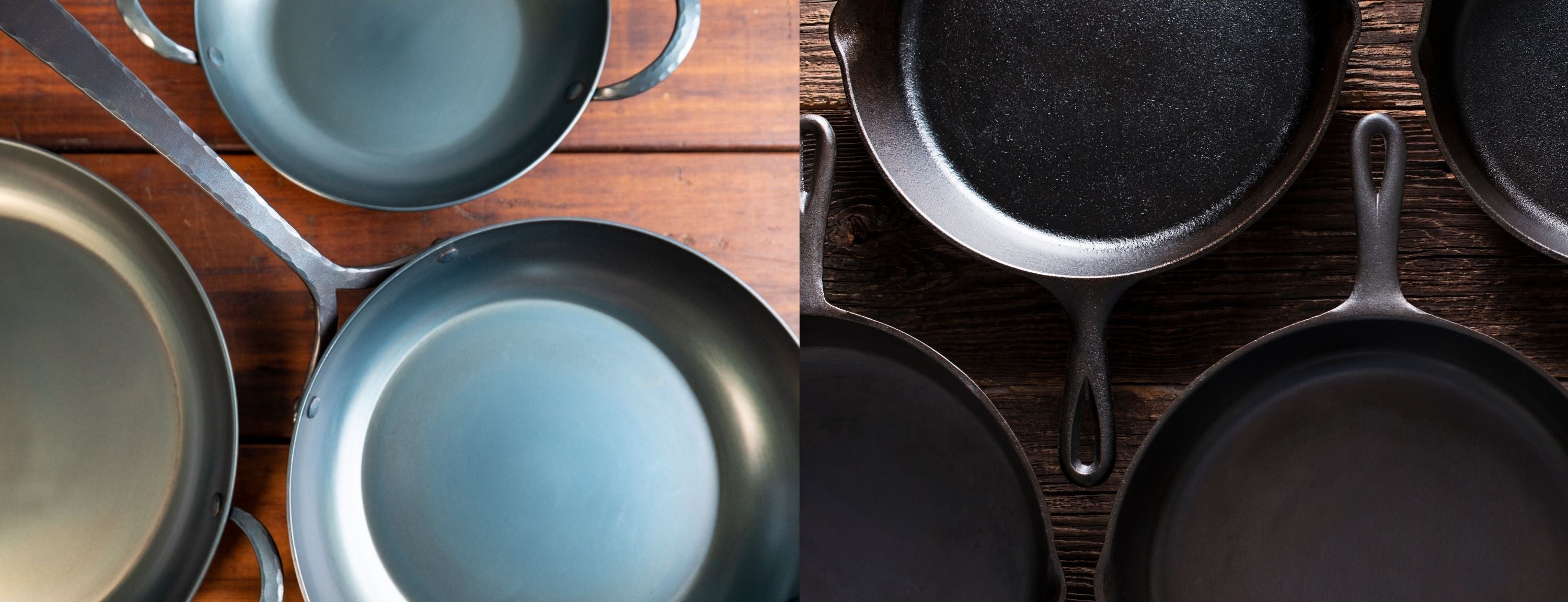


In the world of heirloom cookware, two materials stand above the rest: Carbon Steel and Cast Iron. While they share a deep culinary history and a similar ability to develop a natural non-stick patina, they offer very different experiences on the stovetop. At Blanc Creatives, we have a deep respect for our cast iron "cousins," but understanding the technical nuances between the two is essential for choosing the tool that fits your cooking style.
The primary difference between these two materials is their iron-to-carbon ratio.
Cast Iron: Contains 2% to 4% carbon. This high carbon content makes the metal strong but brittle, requiring it to be cast in thick, heavy molds.
Carbon Steel: Contains roughly 1% carbon. This lower ratio makes the steel malleable, allowing us to create thinner, lighter pans with ergonomic, sloped sides.
Because carbon steel is malleable, it can be shaped with features that are impossible for cast iron:
Weight: Carbon steel is typically 25-30% lighter than cast iron, making it easier to toss vegetables or maneuver with one hand.
The Handle: Our signature long, split handles are designed to stay cooler on the stovetop; a luxury that cast iron’s short, integrated handles simply can't provide.
Shape: The sloped walls of a carbon steel skillet are optimized for "the chef’s flick," while cast iron’s vertical walls are better suited for shallow frying or baking.
Cast Iron is a heat reservoir. It takes a long time to get hot, but once it’s there, it stays there. This is perfect for deep-searing a thick steak or keeping a dish warm at the table.
Carbon Steel is responsive. It heats up and cools down quickly, giving you total control. If your sauce is starting to break, a carbon steel pan reacts to a dial turn on your stove almost instantly.
While both materials will last a lifetime, they handle stress differently. Cast iron’s high carbon content makes it susceptible to "thermal shock" or physical cracking if dropped on a hard floor. Carbon steel, being more flexible, won't crack or shatter. It is built to survive the rigors of both professional kitchens and open-flame camping.
You want a pan that acts as a "heat battery." It’s the perfect choice for slow-cooked stews, cornbread, or searing a steak where you don't need to move the pan often.
You want the performance of a professional chef. If you value stovetop agility, precise temperature control, and a pan that is light enough for everyday use without sacrificing the ability to develop a legendary non-stick seasoning.
Ready to feel the responsiveness of hand-crafted carbon steel?
